


Resources » Biology
Resources ≀ Biology

Anthropogenic sources dominate gray wolf mortality but leading cause varies with management regime
March 30, 2026
Despite changes in legislation and public attitudes towards large predators, human-caused mortality continues to impact survival and conservation of carnivore species. Understanding the drivers and timing of mortality is critical for informing evidence-based management and policy decisions aimed at improving … read more
Posted in Biology, Resources | Tagged Canis lupus, carnivore, cause-specific mortality, Endangered Species Act, Legal harvest, poaching, survival
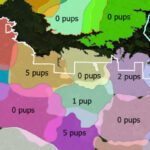
Born to die: pack and population level estimates of wolf pup survival and recruitment in the Greater Voyageurs Ecosystem
March 30, 2026
Wolf pup Canis lupus survival is a key driver of wolf population dynamics that remains poorly understood, especially in forested systems, because wolf pups are difficult to monitor. We used a combination of pup counts at dens and remote camera … read more
Posted in Biology, Resources | Tagged Canis lupus, forested ecosystem, litter size, mortality, prey abundance, remote camera
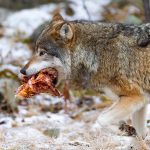
Subsidies from anthropogenic resources alter diet, activity, and ranging behavior of an apex predator (Canis lupus)
August 29, 2025
Acquisition of resources can be costly and individuals are predicted to optimize foraging strategies to maximize net energy gain. Wolves (Canis lupus) would be expected to scavenge on subsidies from anthropogenic resources when these resources provide an energetic benefit over … read more

Misleading Overestimation Bias in Methods to Estimate Wolf Abundance that use Spatial Models
August 29, 2025
Population abundance is the main criterion used by agencies to manage and conserve species and it allows adaptive decision-making in response to impacts. Its estimation is particularly important for large mammals, especially carnivores that are notoriously difficult to monitor yet … read more
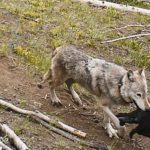
Wolves Use Diverse Tactics to Track Partially Migratory Prey
August 29, 2025
Shawler et al. highlight dynamic predator responses to prey with variable migratory behavior. Wolves tracked partially migratory elk using diverse movement tactics, including migratory coupling. Some wolves moved young pups to homesites closer to migratory elk summer range, challenging assumptions … read more

Intrinsic and environmental drivers of pairwise cohesion in wild Canis social groups
February 1, 2025
Animals within social groups respond to costs and benefits of sociality by adjusting the proportion of time they spend in close proximity to other individuals in the group (cohesion). Variation in cohesion between individuals, in turn, shapes important group-level processes … read more
Posted in All News, Biology, Resources | Tagged animal sociality, canis, cohesion, cooperative behavior, coyotes, group size, human footprint, wolves

